50 Songs Nobody Heard: How My Rejected Demos Became My Greatest Teacher
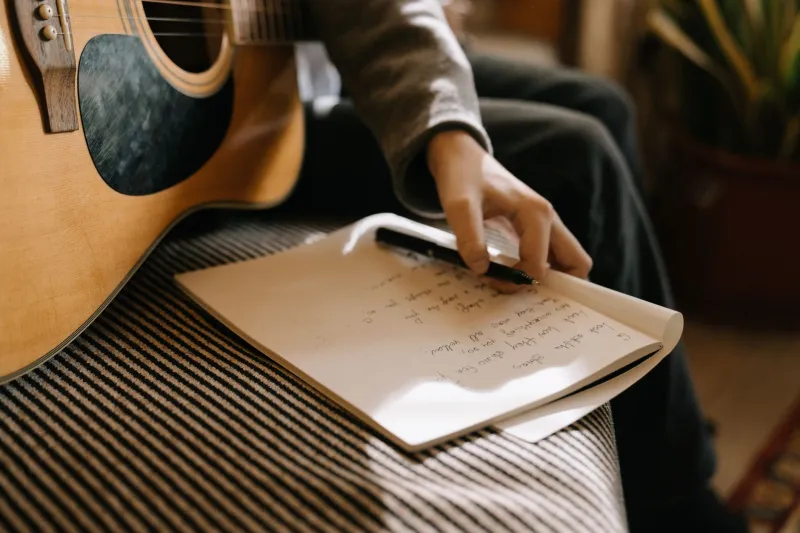
There's a hard drive sitting on my desk right now. It's not glamorous — just a little black rectangle with a cracked corner from the time I knocked it off a coffee table during a particularly frustrating recording session. On it live roughly 50 songs that never saw the light of day. No streaming plays. No live performances. No fan reactions. Just me, some rough vocals, and a whole lot of unfinished ideas gathering digital dust.
For a long time, I treated that hard drive like a graveyard. Something to ignore, maybe eventually delete. But somewhere along the way, I stopped seeing those shelved demos as failures and started seeing them for what they actually were — the most honest education in songwriting I ever received.
The First Demo That Broke Me (In the Best Way)
I remember the first song I ever really believed in that got shot down. I'd spent two weeks on it. Layered the guitars just right, nailed what I thought was a killer hook, even drove three hours to record it at a proper studio outside Nashville. The producer listened through once, leaned back in his chair, and said something I've never forgotten:
"It sounds like you're trying to write a hit. What are you actually trying to say?"
I didn't have a good answer. And that silence told me everything.
That demo got shelved, but the question it left behind didn't. I carried it into every session after that, and honestly, it changed the entire way I approached a blank page.
Performing for Nobody: The Strange Freedom of Songs That Fail
Here's something weird that happens when you write a song and it doesn't work — you get brutally honest with yourself really fast. There's no audience to impress, no label exec nodding along, no social media comment section to validate your choices. It's just you and the truth of whether the song actually means something.
Some of those 50 demos failed because the production was off. Some failed because the melody wasn't strong enough. But if I'm being completely real, most of them failed because I was writing for an imaginary audience instead of writing for myself. I was chasing a sound I thought people wanted rather than saying something I actually needed to say.
That's a trap a lot of us fall into — not just musicians, but anyone who creates anything. You start making work for the reaction instead of making work from the gut. And audiences can feel that inauthenticity even if they can't name it. Something just feels hollow, like a song-shaped object rather than an actual song.
What Rejection Actually Teaches You (If You Let It)
Every rejected demo left behind a different lesson. Let me break down a few of the big ones:
Vulnerability is not weakness — it's the whole point. The demos that came closest to working were always the ones where I let something real slip through. A lyric about my dad. A melody that came out of a really dark Tuesday night. The moment I stopped protecting myself inside the song was usually the moment something interesting started happening.
Craft and emotion aren't opposites. Early on, I thought being "authentic" meant being raw and unpolished. But some of my most emotionally genuine songs were also the most technically weak — and they still didn't connect because the craft wasn't there to carry the feeling. You need both. The emotion gives the song its reason to exist; the craft gives it legs to actually get somewhere.
Finishing bad songs is a skill. I used to abandon ideas the second they stopped feeling exciting. But I learned that finishing a bad song teaches you things that quitting never will. You find out where your instincts go wrong. You discover which habits you keep falling back on. Finishing a song that doesn't work is still finishing a song — and that muscle matters.
Self-doubt is information, not a stop sign. Every single one of those 50 demos came with a side of self-doubt. The question isn't whether you feel it — you will, every time — but whether you let it shut you down or push you deeper. Some of my best rewrites happened because a nagging voice in my head kept saying this isn't right yet.
The Song That Finally Clicked
About two years into what I privately call my "demo graveyard era," I wrote a song in about 45 minutes that I almost didn't take seriously because it came so easily. No overthinking. No second-guessing the hook. I just sat down, started playing something that felt true, and followed it.
That song went further than anything I'd made before it.
I'm not saying the quick ones are always the best ones — they're not. But what that experience showed me was that all those failed demos had been quietly clearing out the clutter. All the posturing, the second-guessing, the chasing of trends — I'd worked through so much of that in songs nobody ever heard that when something real came along, I finally had the space to let it breathe.
Why I'm Glad Those Songs Never Came Out
I used to wish I could go back and erase those 50 demos from my timeline — pretend they never happened, skip straight to the good stuff. Now I think that's exactly the wrong way to look at it.
Those songs are the reason the better ones exist. They're the reps I put in before the game mattered. They're the conversations I had with myself about what I actually believe, what I actually feel, what I'm actually trying to do with music.
If you're out there grinding through your own version of this — writing songs that aren't working, painting things that aren't landing, making stuff that keeps falling short — I want you to hear this: the failure isn't the detour. It is the road.
The hard drive with the cracked corner isn't a graveyard anymore. It's a library. And every now and then, I open it up and listen back — not with embarrassment, but with something closer to gratitude.
Those 50 songs nobody heard taught me more about creating from the heart than any success I've had since. And I wouldn't trade a single one of them.