Nobody Was Going to Hand Me That Title, So I Took It Myself
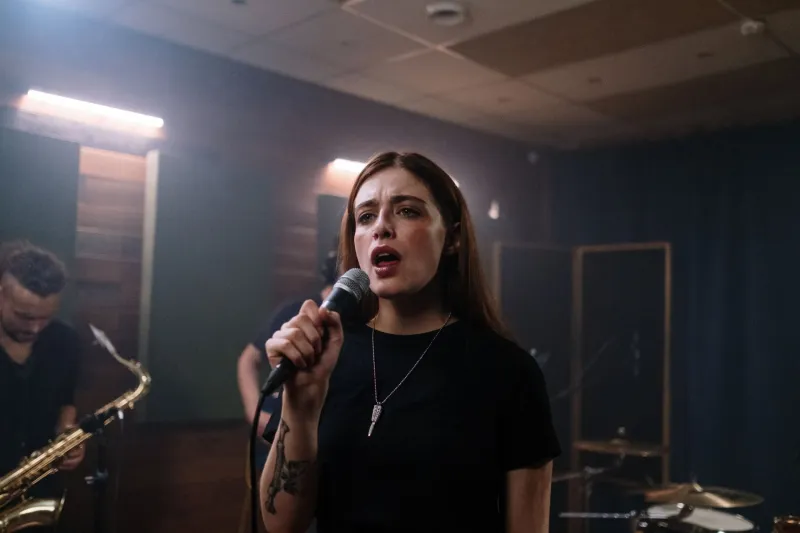
For an embarrassingly long stretch of my life, I had a whole system for downplaying what I did.
At parties, when someone asked what I was into, I'd say I "messed around with music." In conversations with people who had actual record deals or gallery shows or publishing credits, I'd shrink. I'd qualify everything. "I'm not really a real musician, I just—" and then I'd trail off into some self-deprecating footnote that let me off the hook before anyone could reject the label I secretly wanted.
I was writing songs constantly. I was recording. I was thinking about music every waking hour. But calling myself an artist? That felt like lying.
It wasn't.
The Gatekeeping Nobody Talks About Honestly
There's a specific kind of gatekeeping in creative industries that's almost never enforced by actual gatekeepers. It's enforced by us — by the people who want in. We do it to ourselves before anyone else gets the chance.
The music industry has real gatekeepers, don't get me wrong. Labels, playlist curators, booking agents, publications — they hold real power over certain kinds of visibility. But the title of artist? Nobody owns that. There's no licensing board. There's no certification. The Grammy committee does not need to issue you a membership card before you're allowed to say the word.
And yet we wait. We wait for someone to discover us, to validate us, to point at us in a room and say "yes, you — you count." We treat external recognition as the thing that makes the identity real, when actually the identity was real the whole time. We just didn't claim it.
The Moment I Got Tired of Waiting
I remember the exact conversation that flipped the switch for me. I was talking to a guy — older, had been in a working band for decades, played small venues all over the Midwest, never had a viral moment, never got a write-up in a major outlet. Just played music his whole life because it was what he did.
I asked him how he dealt with the pressure of "making it." He looked at me like I'd asked something slightly weird. Then he said, "I made it a long time ago. I decided I was a musician and then I was one."
That was it. No speech. No philosophy lecture. Just that.
I drove home thinking about how many years I'd spent waiting for someone to give me permission to be what I already was. And I felt — honestly? — kind of angry. Not at anyone in particular. Just at the whole invisible system I'd been obeying without realizing it.
What the Psychological Block Actually Is
I've thought about this a lot since then, and here's what I think is really going on: when we refuse to claim the identity of artist, we're protecting ourselves from accountability. If you never call yourself a musician, you can never fail as one. The label carries expectation, and expectation means you can fall short of it.
It's a brilliant little defense mechanism. It's also completely crippling.
Because the moment you say "I am an artist" out loud — to a stranger, to a friend, to your own reflection — something shifts. You start treating your work differently. You start protecting your creative time differently. You start making decisions about what you share and how you share it from a place of identity rather than a place of hoping someone else will decide for you.
The label isn't a reward. It's a commitment. And making that commitment to yourself, before any external proof shows up, is one of the hardest and most important things a creative person can do.
Practical Ways I Actually Did It
This isn't just abstract philosophy for me. I had to take real, kind of awkward steps to rewire how I talked about myself and my work.
I changed how I answered "what do you do." Straight up. No qualifiers, no footnotes. "I'm a musician and songwriter." Said it until it felt normal. It took a while.
I started treating my creative time like it had value. Because it does. But I had to act like it did before I fully believed it. I blocked off time in my calendar. I told people I had "work" when I was recording. Small stuff that added up.
I stopped asking for permission disguised as feedback. There's a difference between seeking genuine creative input and seeking someone to tell you your work is worthy of existing. I was doing the second thing way more than the first. Learning to tell those two impulses apart was huge.
I put work out before I felt ready. This one still makes me nervous every time. But readiness is mostly a myth. You get ready by doing, not by waiting until the conditions are perfect.
The Title Was Always Yours
If you're reading this and you make things — songs, paintings, stories, videos, whatever — and you've been hedging on what to call yourself, I want to be direct with you: you're already an artist. You have been. The question is just whether you're going to own it.
Nobody is coming to officially declare you legitimate. The industry isn't going to send a letter. Your favorite artist isn't going to personally cosign your identity. That validation, if it comes, comes after the claiming — not before.
So claim it. Say it out loud. See what changes.
I'll tell you what changed for me: everything.