The Most Powerful Thing I Ever Added to a Song Was Nothing
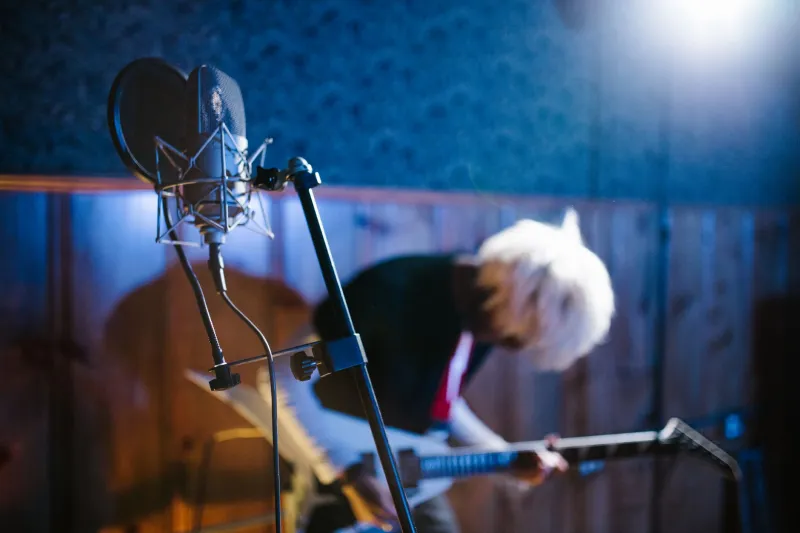
The Problem With Having Too Many Good Ideas
The worst creative sessions I've ever had weren't the ones where nothing came. They were the ones where everything came — where every idea felt good, every layer fit, and I kept building and building until the song collapsed under its own weight.
There's a particular kind of creative blindness that comes from abundance. When you're generating ideas easily, when you have the skills to execute them and the gear to capture them, the hardest thing in the world is knowing when to stop. Every new element feels like an addition. You don't notice until it's too late that you've been subtracting something far more valuable: space.
What Silence Actually Does in Music
Silence isn't the absence of sound. That's the technical definition, but it's not the creative one.
In music, silence is active. It's the moment where the listener's imagination takes over. It's the breath before the word that makes the word land. It's the gap between notes that gives the notes their shape. Without it, everything runs together into a wall of sound that the brain processes as texture rather than meaning.
Think about some of the most emotionally powerful musical moments you've ever experienced. A lot of them probably involve a sudden drop — a place where the arrangement steps back and lets something simple carry the weight alone. A single piano note. One vocal line with nothing underneath it. A beat that stops for exactly two measures and then comes back.
That restraint isn't accidental. It's one of the most sophisticated creative decisions a musician can make, and it takes more confidence than adding another layer ever does.
The Session That Taught Me to Stop Reaching
I was deep into a project a few years back — a song that had been through probably a dozen arrangement iterations. Every version had more going on than the last. I kept thinking the problem was that it needed something else: a different texture in the low mids, a counter-melody in the second chorus, a string pad to open up the outro.
A producer friend of mine listened to the latest version and said something that stopped me cold: 'Every time I start to feel something, there's already a new sound there telling me what to feel. You're not leaving room for me to be in the song.'
I went home and spent a session doing the opposite of everything I'd been doing. I started pulling things out instead of adding them. I muted the string pad. I cut the counter-melody. I stripped the second verse down to just guitar and vocal.
The song became something else entirely — something quieter and more uncomfortable and significantly more honest. The version with everything was impressive. The version with almost nothing was real.
Restraint as a Creative Identity
Here's where this goes beyond production choices and into something more fundamental.
The instinct to fill space — in music, in conversation, in creative work generally — often comes from discomfort with uncertainty. If there's sound in every corner, nobody can hear the gaps. If there's always another idea arriving, you don't have to sit with the question of whether the core idea is strong enough on its own.
Learning to leave space is partly a technical skill and partly an act of trust. Trust that what you've already put down is enough. Trust that the listener is capable of meeting you halfway. Trust that your voice, unaccompanied by layers of supporting evidence, is worth hearing.
That last one is the hardest. Because stripping things back means your core idea has nowhere to hide. If it's not strong enough, the silence will expose it. That vulnerability is uncomfortable. Most of us respond by adding another track.
Saying No as a Creative Practice
I've started thinking about restraint as something I practice actively, not just something that happens when I run out of ideas.
In practical terms, this looks like a few specific habits:
The subtraction pass. Before I call anything finished, I do a dedicated pass where the only goal is to remove things. Not to judge whether they're good — they're probably good — but to hear what the song sounds like without them. Sometimes I put them back. Often I don't.
The 'does this serve the song or serve my ego' question. Honestly, a lot of the layers I used to add were about demonstrating capability rather than serving the music. A cool production choice that shows off what I can do doesn't belong in a song if it pulls attention away from what the song is feeling.
Sitting with discomfort instead of filling it. When a moment in an arrangement feels uncomfortable or uncertain, my first instinct is to add something. Now I try to sit with that discomfort for a while before I act on it. Often, the discomfort is the right feeling — it's the tension the song needs.
Learning to hear silence as sound. This sounds abstract, but it's actually pretty practical once you start training your ear for it. The gaps in an arrangement are as much a part of the music as the notes. Start listening to what the silence is doing, not just waiting for the next sound to arrive.
The Loudest Thing in the Room
There's a reason that some of the most affecting music ever made is also some of the sparsest. It's not minimalism for its own sake — it's the recognition that when you clear the space, whatever remains becomes enormous.
A single vocal line in an empty room carries more weight than the same line buried in an arrangement. A guitar chord that's allowed to decay into silence lands harder than one that's immediately followed by the next chord. The thing you don't say, the note you don't play, the layer you choose not to add — these are creative decisions as meaningful as anything you put in.
For me, learning restraint wasn't about becoming less. It was about finally trusting that what I had was enough — and letting the silence prove it.