Busted, Dusty, and Absolutely Perfect: The Gear I Almost Gave Away That Now Defines My Sound
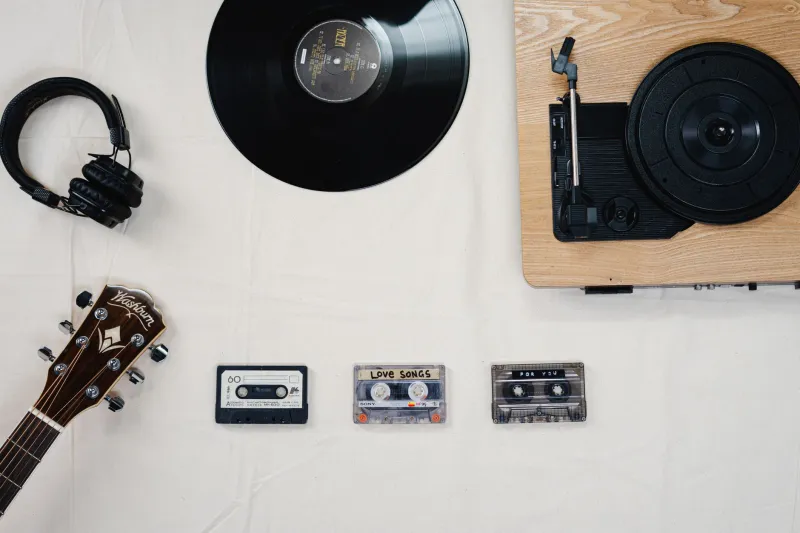
There's a beat-up Yamaha acoustic sitting in the corner of my studio right now. The nut is cracked, two of the tuning pegs are stiff as rusted bolts, and there's a gouge along the body where I dropped it down a flight of stairs sometime around 2009. For years, I kept it around out of guilt more than anything else — the musical equivalent of a houseplant you feel bad throwing out. Then one afternoon I picked it up on a whim, plugged a cheap clip-on mic into GarageBand, and recorded something that made me stop and sit down.
It sounded alive in a way my expensive gear hadn't in months.
That moment cracked something open in me. I started dragging out every instrument I'd shelved, every piece of equipment I'd quietly retired, every recording technique I'd convinced myself was too primitive to matter. What I found was humbling and kind of thrilling at the same time.
The Guitar That Couldn't Stay in Tune (And Why That's a Feature Now)
That Yamaha has a tuning problem. Always has. It drifts — not wildly, but just enough that a long chord rings out with this subtle, wavering quality that no pitch-correction plugin can replicate naturally. For years I fought it. I'd retune between every take, get frustrated, and eventually reach for one of my newer guitars.
But when I stopped fighting it and started leaning into the drift, something interesting happened. Tracks recorded on that guitar have a warmth and a restlessness to them — like the song itself is breathing. A friend who produces records out of Nashville heard a rough mix I sent him and asked what I'd done to get that "living room" quality. I told him the truth: I used the guitar I'd been embarrassed by for fifteen years.
Limitation, it turns out, is just another word for character.
The Four-Track Cassette Recorder I Almost Sold for Forty Bucks
I picked up a Tascam Portastudio at a garage sale in my early twenties, used it obsessively for about two years, and then abandoned it the second I got access to a proper DAW. It sat in a storage bin under a pile of cables until I was cleaning out my space during the pandemic and nearly listed it on Facebook Marketplace.
Instead, I plugged it in. The tape hiss alone was enough to stop me cold.
There's a particular texture that analog tape adds — a compression, a softness around the edges of a sound — that I'd been spending years trying to recreate digitally with plugins that cost more than the original machine. When I started running vocals and guitar through the Tascam and then bouncing those recordings into my current setup, the results were immediate and obvious. That "imperfect" signal chain became the foundation of several tracks I'm genuinely proud of.
The four-track didn't fail me. I failed it by assuming newer automatically meant better.
A Busted Keyboard and the Accidental Patch That Became a Signature
Somewhere around 2012, I had a cheap Casio keyboard with a stuck key — B-flat in the third octave, jammed down permanently. I used it anyway because it was what I had, and I learned to write around the limitation. But occasionally, when I'd let a note ring out near that register, the stuck key would create this unintended drone underneath everything.
I hated it. I complained about it constantly. Then I played a recording back for someone and they asked me how I'd layered that low hum. They thought it was intentional. They thought it was cool.
I've since moved on from that keyboard, but the lesson stuck around. I now deliberately introduce fixed drone elements into arrangements because of what that broken Casio accidentally taught me about tension and texture. What felt like a defect was actually an education.
Why Imperfection Hits Different Than Precision
I think a lot about why listeners connect to certain recordings and not others. So much modern music is technically flawless — perfectly tuned, perfectly timed, perfectly compressed — and yet it can feel strangely distant. Like watching a movie through glass.
The recordings I've made with busted, limited, or "wrong" equipment have a directness to them that I struggle to manufacture intentionally. The imperfections tell the truth. A slightly out-of-tune guitar says this was played by a human being in a real room. Tape hiss says this moment existed in actual time. A stuck key drone says something unexpected happened here and we let it stay.
There's a reason artists like Elliott Smith recording on a four-track in his apartment or early Bruce Springsteen demos cut on cheap equipment still resonate so deeply decades later. The constraint forced a kind of honesty that polish sometimes erases.
What I Learned From Almost Throwing It All Away
I'm not romanticizing poverty or pretending that bad gear is always good gear. There's a difference between working with limitations creatively and just suffering through a broken setup. But I do think there's a real danger in constantly chasing the newest, most pristine version of everything.
Every time I've upgraded without looking back, I've lost something. Sometimes that something was just a bad habit I needed to drop. But sometimes it was a sonic fingerprint I didn't know I had until it was gone.
Now I keep the busted Yamaha in the corner, always within reach. I keep the Tascam on a shelf where I can see it. I've got a reverb pedal with a cracked housing that does this weird, slightly unpredictable thing when the room temperature drops — and I plan my recording sessions around it accordingly.
The mistakes I almost threw away turned out to be the most honest teachers I ever had. They didn't care about sounding impressive. They just sounded like me.
And honestly? That's been worth more than anything I've bought brand new.