Half-Built and Beautiful: The Hidden Magic Living in My Unfinished Songs
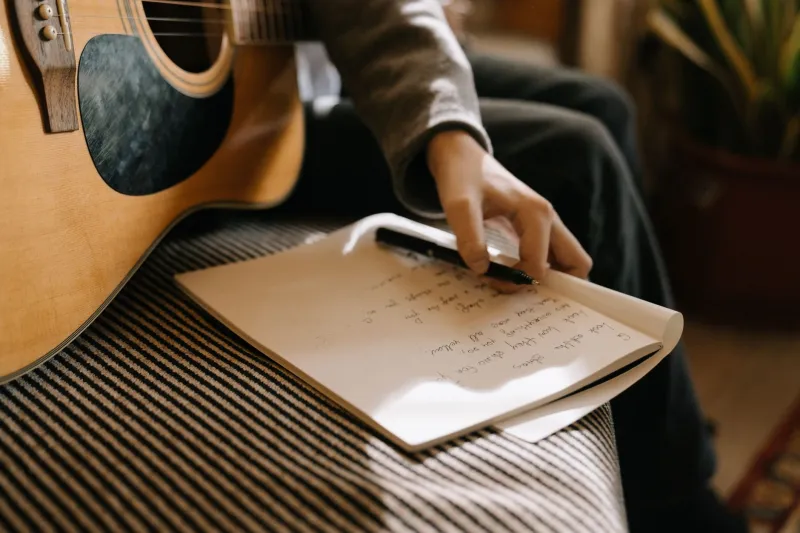
I've got a folder on my laptop that I don't talk about much. It doesn't have a fancy name — just "Drafts" — but honestly, it might be the most important creative space I own. Inside it are somewhere north of sixty song ideas in various states of incompletion. Some are just a title and a chord progression scribbled in the notes app. Some are full verses with no chorus. A few are almost there — like, almost — and then they just stop, mid-thought, like a sentence that forgot where it was going.
For years, that folder made me feel like a failure. Like I was looking at evidence of everything I hadn't finished, every promise I'd made to myself that I'd broken. But somewhere along the way, my relationship with those unfinished pieces changed. And I think it's one of the most useful creative shifts I've ever made.
The Pressure to Package Everything
There's this expectation in the music world — really, in any creative field — that the goal is always the finished product. The album. The single. The thing you can hand someone with a release date attached to it. And I get it. That's how you build a career. That's how people find your work. You can't put a half-finished song on streaming platforms and say, "Just imagine the rest."
But that pressure to package everything, to wrap it up and ship it out, does something sneaky to the creative process. It starts pulling you toward the ending before you've fully explored the middle. You stop following a strange musical idea down a weird hallway because you're already thinking about whether it'll make sense to an audience. You sand down the rough edges before you even know if the rough edges were the whole point.
I've killed more than a few promising songs that way. Chased them toward a conventional structure, a tidy resolution, a hook that would make sense on the radio — and watched whatever made them interesting drain right out.
What Staying Unfinished Actually Protects
Here's what I've noticed about the stuff in my drafts folder: it's alive in a way that a lot of my finished work isn't. There's a verse I wrote at 2 a.m. during a weird stretch last winter that I never completed. Just twelve lines. No chorus, no bridge, no production notes. But every time I open it, I feel the exact emotional temperature of that night. It's preserved in amber, almost. The moment I try to finish it — try to make it into a song — something about that temperature changes.
Unfinished work holds space for the feeling that started it. Finished work, by necessity, makes compromises. It has to account for structure, for pacing, for the listener's patience. That's not a bad thing — it's just the cost of completion. But it means the rawest, most unfiltered version of an idea often lives in the draft, not the final cut.
Some songs are powerful precisely because they're half-built. Like a photograph of a house under construction — there's something in the exposed bones that a finished, painted, landscaped house can never quite show you.
The Perfectionism Trap
Perfectionism is sneaky because it disguises itself as high standards. And look, I do have standards. I care about my craft. But there's a version of perfectionism that isn't really about quality at all — it's about fear. Fear that if something goes out into the world and it's not perfect, people will know you're not perfect.
Leaving things unfinished used to feel like giving up. Now I think of it differently. Sometimes I'm not abandoning a song — I'm protecting it. Protecting it from being forced into a shape it doesn't naturally want to take. Protecting it from the version of me that's more concerned with how it lands than with what it says.
Not every creative idea is meant to become a product. Some of them are just meant to happen. To exist as a moment of contact between you and something you were feeling. That's valuable. That counts. It doesn't need an audience to matter.
When the Draft Becomes the Point
I've started thinking of my drafts folder less like a to-do list and more like a journal. A record of creative moments that were real, even if they were incomplete. And weirdly, revisiting those pieces has become one of my favorite parts of the creative process.
I'll open something from three years ago and hear it with totally fresh ears. Sometimes I finally understand what it was trying to be. Sometimes I finish it — but only because I'm ready, not because I'm forcing it. And sometimes I just sit with it for a few minutes, feel whatever I was feeling when I wrote it, and close the file. That's enough.
There's also something freeing about giving yourself permission to not finish things. When you know that starting something doesn't obligate you to complete it, you start more things. You follow weirder instincts. You let yourself write the verse that doesn't make sense yet, because you're not already dreading the bridge you'd have to write after it.
What I'd Tell Anyone Who's Drowning in Drafts
If you've got your own version of my folder — a notes app full of half-ideas, a hard drive with abandoned projects, a sketchbook with unfinished drawings — I'd encourage you to look at it differently. That's not a graveyard. That's a garden.
Some of those seeds need more time. Some of them grew exactly as far as they were supposed to. And some of them might be the most honest creative work you've ever done, precisely because nobody told you how they were supposed to end.
The finished product gets the applause. But the draft? That's where you were telling the truth.
And sometimes the truth doesn't need a chorus.