The Stranger Who Rewired My Brain: What an Unlikely Creative Partner Taught Me About My Own Sound
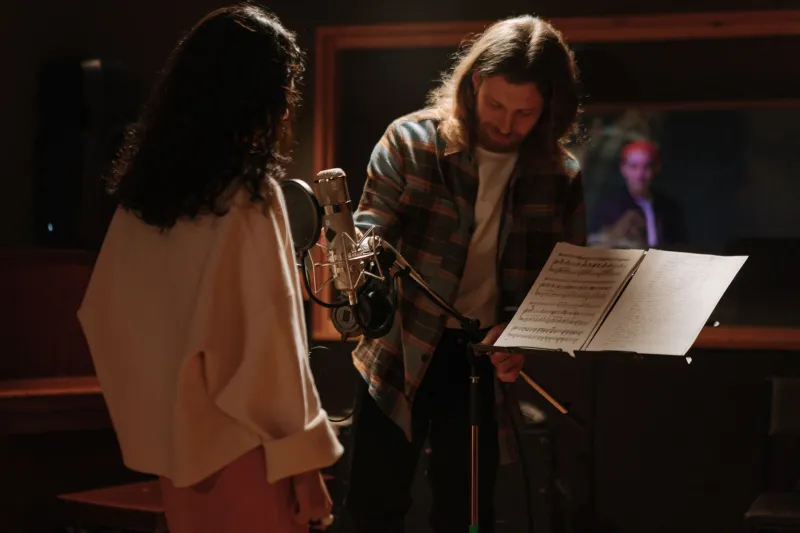
I've always been pretty territorial about my creative process. Not in a mean way — just in that quiet, protective way most artists are when they've spent years building a sound they finally feel comfortable calling their own. You get used to your habits. Your go-to chord progressions, the way you layer vocals, the tempo you instinctively reach for when a new idea starts forming. It becomes a kind of home base.
So when Marcus — a producer I met through a mutual friend at a small showcase in Nashville — asked if I wanted to come by his studio and just mess around, I almost said no. Marcus didn't make the kind of music I made. Not even close. He was deep into electronic production, pulling from ambient textures, lo-fi hip-hop, and what he called "broken soul" — this genre-blurring thing that honestly didn't have a clean label. I was a guitar-and-guts kind of guy. Acoustic bones, raw lyrics, emotional directness. We seemed like a total mismatch.
But I went anyway. And man, I'm glad I did.
Walking Into Someone Else's World
The first hour in Marcus's studio was genuinely uncomfortable. Not in a hostile way — he was warm, easy to talk to, clearly passionate about what he did. But his process was so foreign to mine. He wasn't starting with melody or lyrics. He was building atmosphere first, dropping in samples, looping textures, letting sounds collide until something felt right. There were no chord charts. No scratch vocals. Just this layered, breathing thing taking shape in front of us.
I kept reaching for my guitar, wanting to anchor everything in something familiar. He kept gently nudging me away from that instinct. "What if we just sit with it for a minute?" he'd say. "What does this make you feel before you try to say anything?"
That question honestly stopped me cold. I'd never approached a song that way. I usually came in with something to say and built the music around it. He was asking me to let the music tell me something first.
The Moment Things Shifted
About three hours in, something loosened up. Marcus had built this slow, drifting instrumental — sparse piano notes, a muffled beat that felt like a heartbeat heard through a wall, and these distant, almost ghostly string textures. It was nothing like what I'd normally work with. But something about it cracked me open.
I picked up my guitar, but instead of playing the way I usually do — full strums, defined rhythm — I started playing against the track. Quiet, fragmented. Little melodic phrases that floated in and then disappeared. And then I started singing. Not a finished lyric. Just words coming out as they came. Honest and unpolished and a little raw in a way that felt different from my usual rawness.
Marcus hit record without saying a word.
What came out of that session became one of the most emotionally honest pieces of music I've ever made. It didn't sound like anything I'd released before. It had my voice, my emotional fingerprints — but it was built on a foundation I never would have constructed alone.
What the Collaboration Actually Taught Me
Working with Marcus showed me a few things I'd been too comfortable to notice on my own.
I had been confusing familiarity with authenticity. My usual process felt true because it was mine, but some of what I thought was genuine expression was actually just habit. The same emotional vocabulary dressed in slightly different clothes. Marcus's approach forced me to find new words — musically and literally.
Discomfort is information. Every time I felt the urge to grab my guitar and "fix" what felt unresolved in the track, that urge was telling me something. Sometimes it was telling me to trust the process. Sometimes it was telling me the song needed something specific that only I could give it. Learning to tell the difference was huge.
Genre walls are mostly in your head. I used to think staying in my lane was about integrity. Turns out, it was partly about fear. Fear that stepping outside my sound would mean losing it. But my voice didn't disappear inside Marcus's world. If anything, it got clearer — because I had to fight a little harder to find it.
The Song That Came Out of It
We ended up finishing two tracks together. One of them I've kept close, still deciding what to do with it. The other I've played for a handful of people whose opinions I trust, and the response has been unlike anything I've gotten before. Not louder or more enthusiastic — just deeper. People said things like "I don't know what that was, but it hit me somewhere I wasn't expecting."
That's the goal, right? That's always been the goal.
I think about Marcus's process now even when I'm working alone. I'll sometimes build atmosphere before I build melody. I'll sit with a feeling before I try to name it. I'll let a song breathe a little longer before I rush in with the chorus.
Why I'm Telling You This
I'm sharing this because I know a lot of creative people — musicians, writers, visual artists — who are protective of their process the same way I was. And I'm not saying that's wrong. Your process is sacred. But there's a difference between protecting your voice and insulating yourself from anything that might stretch it.
The collaboration I almost said no to ended up being one of the most valuable creative experiences of my life. Not because Marcus made me someone different. But because he helped me find a part of myself I'd been accidentally keeping quiet.
Sometimes the person who changes everything is the last one you'd think to call.