The Only Listener Who Mattered Was Me: How I Finally Stopped Creating for the Crowd
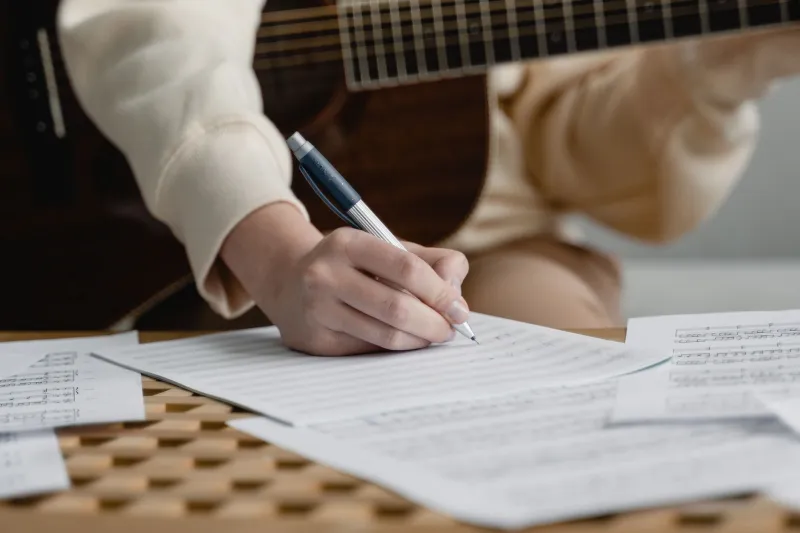
There's a specific kind of exhaustion that comes from making art for other people. Not the good kind of tired — not the worn-out-but-satisfied feeling after a long recording session or a night of playing live. I'm talking about the hollow kind. The kind where you finish a song, post it online, and immediately start refreshing the screen like you're waiting on a verdict from a jury you never actually wanted to face.
I lived in that cycle for a long time. Longer than I'd like to admit.
The Metrics Trap
When I first started putting music out, I told myself I didn't care about numbers. Classic rookie move. Because the moment that first song hit a few hundred streams, I was hooked. Not on the music. On the count. I started reverse-engineering what I thought people wanted — studying what was getting traction, tweaking my sound to fit whatever felt like it had momentum that week, and quietly shelving the songs that felt too personal, too weird, or too me.
And here's the thing — some of that stuff actually performed okay. A few tracks got picked up by playlists. A couple posts got decent engagement. By the numbers, things were working.
But I hated almost everything I was making.
That's a rough place to be. You're technically succeeding at something you've completely lost the thread of. I remember sitting in my studio one night, listening back to a track I'd just finished, and feeling nothing. Not pride, not vulnerability, not even mild curiosity. Just nothing. The song sounded fine. It was competent. It was designed to land — and that was exactly the problem.
The Moment the Script Flipped
I can't point to one clean turning point, because honestly it was more of a slow unraveling than a single revelation. But there was one night that sticks out.
I was messing around late, no real plan, just noodling on a progression I'd been sitting with for weeks. Nothing polished, nothing strategic. I wasn't thinking about a release or a playlist pitch or what the hook needed to do in the first fifteen seconds. I was just playing. And something fell out of me that felt so true it kind of scared me.
I didn't post it. Didn't send it to anyone. Didn't even name the file something useful — just saved it as a date stamp and went to bed.
But I kept coming back to it. Every time I opened that session, I felt something I hadn't felt in a while: investment. Like the song actually mattered. Not because anyone had heard it — because it was real.
That was the beginning of the shift.
What Authentic Intention Actually Looks Like
Here's what I've figured out since then, at least for myself: authentic intention isn't the same thing as ignoring your audience. It's not about being willfully obscure or refusing to care whether your work connects. That's just a different kind of performance — the "I'm too artistic to care" act, which is its own ego trap.
Authentic intention, the way I've come to understand it, means you start from a true place. You ask yourself what you actually need to say, what you actually feel, what you actually hear in your head — before you ask what anyone else might want from it. The audience question can come later. It just can't come first.
When you lead with honesty, something interesting happens. The work gets stranger and more specific, yeah. But it also gets more resonant. Because real specificity — the kind that comes from lived experience rather than calculated relatability — is actually what people connect to most deeply. We don't bond over vague emotions. We bond over the precise, weird, particular details that make us feel like someone else out there actually gets it.
Letting Go of the Approval Loop
The psychological side of this is no joke. If you've spent any real amount of time in the approval loop — and most creatives have — it rewires how you think. You start second-guessing instincts before you've even fully had them. You edit yourself in real time, before anything hits the page or the track, based on an imagined audience reaction that may not even be accurate.
Breaking that habit takes actual, deliberate effort. For me, a big part of it was just building a practice of creating things I never intended to share. Sketches, voice memos, half-finished ideas — stuff that existed purely for the experience of making it. No stakes, no performance. Just the act itself.
Over time, that practice started bleeding into my "real" work. I got more comfortable sitting with discomfort, with imperfection, with the uncertainty of not knowing whether something was going to land. And weirdly, the less I worried about landing, the more things seemed to connect.
The Right Audience Finds the Real Work
Here's the part that still kind of blows my mind: the music I made purely for myself — the stuff I almost didn't share because it felt too exposed — is the music people respond to most. Not universally, not in huge numbers. But the people who connect with it? They really connect. The messages I get about those songs aren't "cool track" or a fire emoji. They're paragraphs. They're people telling me about their own lives.
That's what I was actually after all along, I think. Not volume. Not reach. Real contact.
You can't manufacture that. You can't optimize your way into it. It only happens when you stop trying to engineer a reaction and start trusting that the honest version of what you're making is enough — more than enough — for the people it's meant to reach.
What I'd Tell Anyone Stuck in the Same Place
If you're grinding away trying to figure out what the algorithm wants, what your followers expect, what version of yourself is most marketable right now — I get it. That pressure is real, and it doesn't fully go away. But I'd ask you to try something: make one thing this week that you never plan to show anyone. Make it for the audience of one. See what comes out when there's no judgment on the other side of it.
You might surprise yourself. And eventually, when you're ready to share it, you might surprise a few other people too.
That's the whole gig, honestly. Make the real thing. The rest tends to follow.