Cracked Wide Open: What Showing My Mess Taught Me About Making Real Music
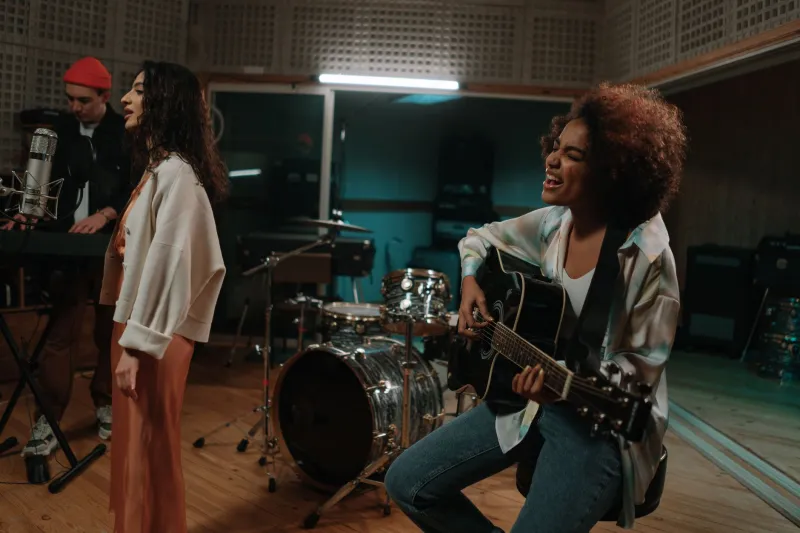
There's this version of being an artist that I chased for a long time. The one where you disappear into your studio, wrestle with your demons in private, and then emerge holding something perfect — a finished song, a complete painting, a story with a clean ending. You present it to the world and people nod and say that's good work. And maybe it is. But somewhere along the way, I started wondering why that kind of approval felt so hollow.
The answer snuck up on me in the most embarrassing way possible.
The Song I Almost Deleted
About three years ago, I was sitting on a voice memo — a half-finished track I'd recorded at two in the morning after a genuinely rough stretch. The melody was wobbly. The lyrics were unresolved. There was a moment in the second verse where I just kind of... trailed off, because I didn't know what came next emotionally, let alone musically. By every standard I'd held myself to, it wasn't ready. It wasn't done.
I almost deleted it. Instead, on a weird impulse, I posted it. No production, no explanation beyond a few honest sentences about where I was mentally when I made it.
The response floored me. Not because it went viral or anything like that — it didn't. But the messages I got were different from anything I'd received before. People weren't saying nice song. They were saying I felt that. They were sharing their own unfinished feelings, their own two-in-the-morning moments. A woman in Ohio told me she'd been carrying a grief she couldn't name for months, and somehow that imperfect, trailing-off voice memo gave it a shape.
That shook something loose in me.
The Lie of the Finished Product
Here's what I think happens when we only share polished work: we accidentally communicate that the struggle doesn't exist. Or worse, that it should exist privately, quietly, out of sight. We curate ourselves into these frictionless versions of creative people, and audiences admire the output while feeling secretly ashamed that their own lives feel so much messier by comparison.
But art isn't supposed to be frictionless. It comes from friction. It comes from the stuff that doesn't resolve neatly, the emotions that don't have names yet, the 11th take of a guitar part that still isn't quite right but has a feeling the clean take never captured.
When I started being more open about the process — posting sketches alongside finished paintings, talking honestly about songs that took two years and still felt incomplete, even writing about creative blocks instead of pretending they don't happen — I noticed something shift. The audience didn't shrink. It deepened. The people who stayed weren't just passive listeners anymore. They were invested, like they were part of something ongoing rather than just consumers of a finished product.
Vulnerability Isn't the Same as Oversharing
I want to be careful here, because I think there's a version of this that goes wrong. Sharing your mess isn't the same as processing your trauma in public without any filter. There's a difference between this is where I am right now and I'm figuring it out and just dumping emotional chaos on people who didn't sign up to be your therapist.
The distinction, at least for me, is intentionality. When I share something unfinished or difficult, I'm trying to make it useful — not just for me, but for whoever's listening. I'm asking myself: is there something in this that someone else might need to hear? Usually, if I'm feeling something acutely enough to make a song about it, the answer is yes. Human experience overlaps more than we think.
The art of vulnerability, if there is one, is learning to be honest without being self-indulgent. It's the difference between a song that says look at my pain and one that says here's a pain we might share.
The Projects That Scared Me Most
Some of my favorite things I've made started as ideas I was convinced were too weird, too personal, or too unfinished to share. There was a series of paintings I did during a period of serious creative doubt — abstract, almost ugly things I made when I wasn't sure I had anything worth saying visually. I called them my doubt paintings and I almost stored them in a closet permanently.
I ended up showing them at a small local gallery almost on a dare to myself. People stood in front of those paintings differently than they had with my cleaner work. They got quiet. A few people asked if they could buy them, which I hadn't expected at all. One guy told me they looked like what anxiety feels like from the inside, and he meant it as a compliment.
That experience rewired how I think about creative risk. The work that costs me something emotionally — the stuff I have to talk myself into releasing — almost always lands harder than the work I felt confident about.
What Failure Actually Teaches You
I've had songs that flopped, projects that went nowhere, collaborations that fell apart spectacularly. For a long time, I treated those as things to quietly forget and move past. Now I think that was a waste.
Failure is information. A song that doesn't connect tells you something about the gap between what you intended and what actually came through. A project that falls apart reveals something about your process, your communication, your assumptions. The question is whether you're willing to sit with that information long enough to actually learn from it — and whether you're willing to let other people see you sitting with it.
There's something weirdly freeing about saying out loud: this didn't work, and here's what I think happened. It takes the power away from failure. It makes it part of the story instead of an ending to it.
The Bridge Between Artist and Listener
At the end of the day, I think what people are looking for in music and art isn't perfection. They're looking for recognition — the feeling that someone else has been where they are, felt what they feel, and made something out of it. That recognition is the whole point. It's why a scratchy folk recording from someone's kitchen can hit harder than a million-dollar production. It's why the demo sometimes feels more real than the album.
The more honest I've gotten about my own creative journey — the dead ends, the breakthroughs, the embarrassing early drafts — the more I feel like I'm actually doing what I set out to do when I started making things. Not impressing people. Connecting with them.
That feels worth a little discomfort.