When It Hurt the Most, I Made the Best Stuff: A Look at Pain as My Creative Compass
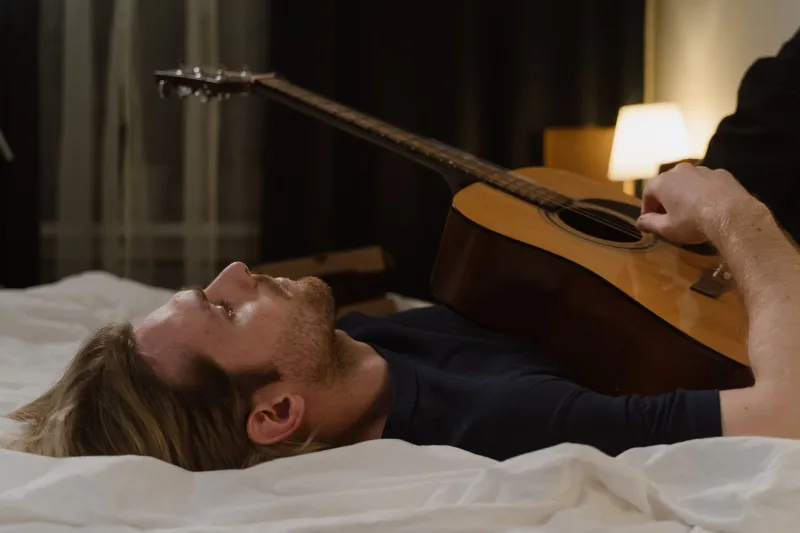
There's this romantic idea floating around in creative circles — that great art comes from some elevated, zen-like state of clarity. Like you sit down at the piano or the canvas with a cup of coffee and the universe just downloads something beautiful into you. And sure, sometimes that happens. But honestly? The stuff I'm most proud of came from the opposite of that. It came from 2 a.m. when I couldn't sleep. From road trips I took alone because I didn't know what else to do. From the specific, gut-punch feeling of watching something I loved fall apart in real time.
I'm not here to glamorize suffering — that's not the point. But I do want to talk honestly about how heartbreak became one of the most reliable creative forces in my life, and why I've stopped being embarrassed about that.
The Night Everything Fell Apart (And I Picked Up a Guitar Instead)
There was a specific stretch — I won't get too deep into the personal details, because some things are still mine — where I was going through a breakup that didn't just end a relationship. It kind of ended a version of me I'd been comfortable being for years. The kind of loss that doesn't just make you sad; it makes you question everything about who you are and what you want.
I remember sitting in my apartment in the middle of a Tuesday night, and I just started playing. No agenda, no session booked, no one waiting on a track. Just me and whatever was sitting in my chest trying to get out. What came out of those few weeks was some of the most raw, stripped-down music I'd ever written. And when I eventually shared some of it — cautiously, half-expecting people to scroll right past — the response floored me. People weren't just listening. They were recognizing themselves in it.
That was the first time I really understood that vulnerability isn't a weakness in creative work. It's actually the whole point.
Why Emotional Honesty Hits Different
Here's the thing about polished, safe creative work: people appreciate it the way they appreciate a well-decorated hotel lobby. It's fine. It's pretty. But they don't feel it.
When you bring something genuinely personal into a song or a piece of art, something shifts. The audience stops being an audience and starts being a witness. And there's a huge difference between those two things. A witness shows up differently — they lean in, they connect, they carry a piece of what you made with them when they walk away.
I've noticed this pattern in the artists I love most, too. The Bruce Springsteen records that hit hardest aren't the anthems — they're the quiet, aching ones about working-class dreams that didn't quite pan out. The Phoebe Bridgers songs that wreck you are the ones where you can tell she's not performing sadness; she's reporting it. That specificity — the kind that only comes from lived experience — is what makes the difference between a song people like and a song people need.
The Courage Thing Nobody Talks About
I want to be real about something: it takes guts to do this. And not just the performative "being vulnerable" kind of courage that gets applauded on social media. I mean the actual, uncomfortable kind — where you take something private and painful and you make it public, not knowing how people will receive it.
There were pieces I sat on for months because I wasn't sure I was ready to let people see that part of me. A lyric that was too specific. A visual that felt too exposed. The fear isn't irrational — once you put something real out there, you can't take it back. People will interpret it, project onto it, sometimes misread it entirely.
But here's what I've figured out: the things I almost didn't share have almost always been the things that connected most. Every time I've chickened out and gone with something safer instead, I've felt it — a kind of creative flatness, like I left the real version of the song in a drawer somewhere.
Turning the Private Into the Universal
One of the most interesting things about working from personal pain is that the more specific you get, the more universal the result tends to be. That sounds counterintuitive, but it's true. If I write a song about heartbreak in general, it floats. If I write about the specific feeling of driving past a restaurant we used to go to and suddenly not being able to breathe right — that lands.
Specificity gives people a handhold. It says, this is real, this actually happened, and that realness gives the listener or viewer permission to bring their own real stuff to it. Your specific becomes a mirror for their specific. That's the alchemy of it.
I've tried to carry that principle into my visual work too — not just music. The art pieces that get the most response are the ones rooted in something I actually felt, not something I thought looked cool or would photograph well. Emotion has a texture that people can sense, even when they can't name it.
What I'd Tell My Younger Self
If I could go back and talk to the version of me that was embarrassed by how much personal stuff was bleeding into his creative work, I'd say: lean into it harder. Don't sand the edges down trying to make it more palatable. Don't swap out the real word for a vague one because the real word feels too naked.
Heartbreak, grief, longing, confusion — these aren't creative liabilities. They're the raw material of the most meaningful work you'll ever make. The goal isn't to be in pain forever; it's to use the pain while it's there, to let it teach you something about yourself and about the people you're making things for.
The heart knows what the head tries to overthink. And the music — or the art, or the story — that comes from that place? That's the stuff that lasts.
So yeah. When it hurt the most, I made the best stuff. And I'm not sorry about that anymore.