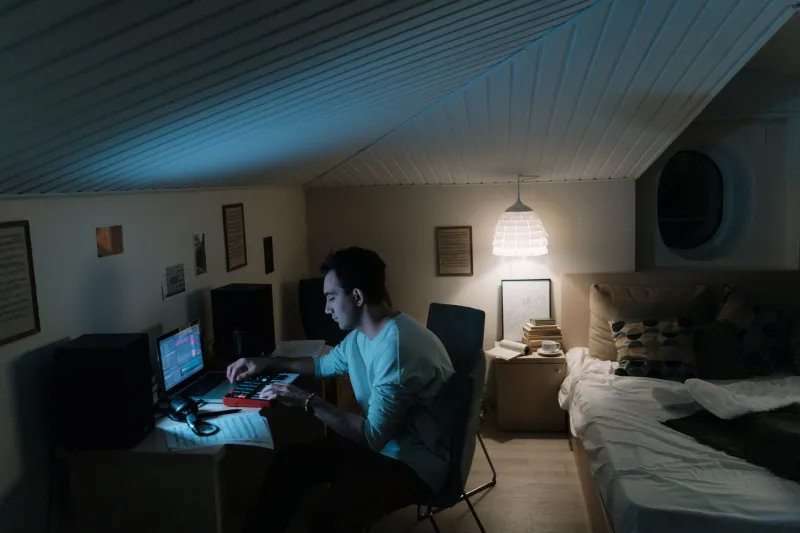
Every few months, a new artist seems to materialize out of thin air. One week you've never heard of them. The next, their song is on every playlist, their face is on every screen, and music blogs are calling them "the next big thing." Social media lights up. The comments fill with people saying some version of the same thing: Where did they come from?
Here's the honest answer: nowhere fast. They came from years of grinding in rooms nobody was watching.
The overnight success story is one of the entertainment industry's most persistent myths — and honestly, one of its most damaging ones. Not because success doesn't happen, but because the version we get sold almost always has a decade of invisible labor edited out of the beginning.
The Highlight Reel Problem
When an artist blows up, what you see is the moment. The viral clip. The late-night performance. The debut album that lands like a meteor. What you don't see — what nobody really talks about — are the five years of playing half-empty venues in cities nobody outside that zip code cares about. The demos that got passed on. The managers who never called back. The side jobs that paid the rent while the music didn't.
Social media has made this worse in a pretty specific way. Platforms reward the highlight. They're not built to showcase the Tuesday afternoon where you rewrote the same chorus eleven times and still hated it. Nobody's going viral for that. So we end up with this warped picture of creative careers where success looks sudden, effortless, and almost accidental — like talent just sort of announced itself one day.
For emerging artists watching from the outside, that picture can be genuinely crushing. If you've been working for three, five, seven years and you're not where you thought you'd be by now, it's easy to read that as failure. It's easy to wonder if you're missing something everyone else seems to have figured out.
You're probably not missing anything. You're just in the part they don't show.
What the Long Road Actually Builds
Here's something I've come to believe pretty deeply: the years that feel like nothing are usually the years that build everything.
There's a kind of musical instinct — a feel for arrangement, for lyrical honesty, for knowing when a song is done versus when it just sounds done — that you cannot shortcut. It comes from repetition. From writing bad songs and slowly understanding why they're bad. From playing live and reading a room wrong and adjusting. From collaborating with people who push back on your ideas and force you to defend what actually matters to you about your own work.
Artists who skip that process — whether through a lucky break that came too early or a manufactured rise engineered by a label — often struggle to sustain it. The craft wasn't there yet. The identity wasn't solid enough. One hit becomes a ceiling instead of a floor because there wasn't enough foundation underneath it.
The decade of work you feel embarrassed about? That's the foundation. And foundations don't get photographed. They just hold everything up.
Reframing the Timeline
I think one of the most useful things any creative person can do is stop measuring their progress against someone else's public timeline. It sounds simple. It's genuinely hard to do when you're watching peers rack up streams and press mentions while you're still figuring out your sound.
But here's a reframe worth sitting with: the question isn't why am I not where they are yet? The better question is what am I building that will still be standing in ten years?
A lot of fast rises are also fast fades. The artists who build something durable — the ones with catalogs that age well, the ones who develop real audiences that stick around through multiple album cycles — they almost always have a long pre-fame chapter. They put in time that nobody clocked. They made mistakes in obscurity, which is honestly the best place to make them.
Think about some of the most respected voices in American music. Before the recognition, before the critical praise, there were years of playing clubs, recording independently, getting ignored by the industry, and doing it anyway. That persistence isn't incidental to the career. It is the career, in a lot of ways. It's where the voice got shaped.
The Hidden Value of Being Unknown
There's actually something worth protecting about the early years — something you don't fully appreciate until it's gone. When nobody's watching, you have permission to be genuinely experimental. You can write the weird stuff. You can try sounds that might not work. You can evolve publicly without the pressure of maintaining a brand or meeting expectations you didn't set for yourself.
That freedom is real, and it's finite. Once there's an audience with opinions about who you are, change gets harder. Not impossible, but harder. The artists who use their unknown years to really dig into what they care about — who let themselves be messy and exploratory before they have to be consistent — often come out the other side with something more honest and more original than the ones who got big before they figured out what they were actually trying to say.
So if you're in those years right now, I'd encourage you to think of them less as a waiting room and more as a workshop. You're not behind. You're building.
What You're Doing Right Now Matters
The song you wrote this week that nobody heard? It matters. The show you played last month to twenty people? It matters. The creative decisions you're making in private — the ones you're not documenting for content, not packaging for an audience — those might be the most important work you ever do.
Not because they'll all lead somewhere obvious. A lot of them won't. But because the act of doing the work, consistently and honestly, over a long stretch of time, is what actually makes an artist. Not a moment. Not a viral clip. Not a co-sign from the right person at the right time.
The overnight success is a myth. The ten-year journey is the real story — and if you're in the middle of yours right now, you're exactly where you're supposed to be.