Every Dollar of My $312 Home Studio, Itemized — and Why It Outrecords the $30K Room I Used to Rent
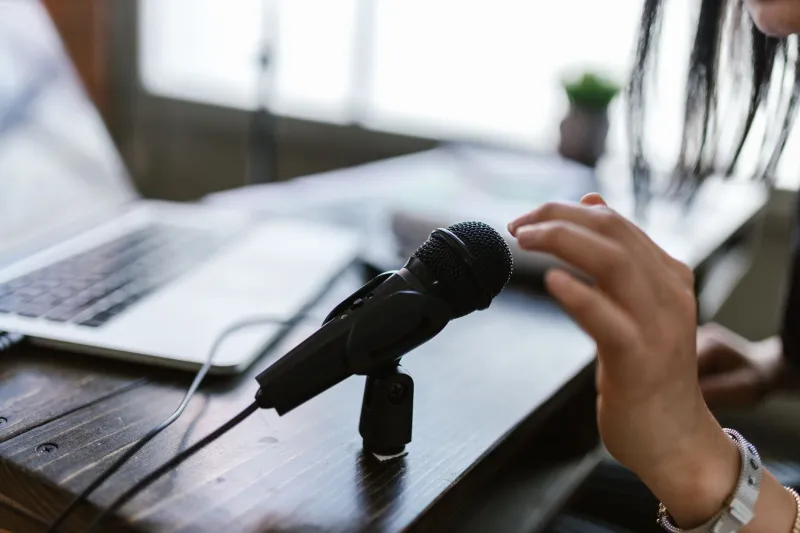
Ten years ago I'd drop $600 on a weekend block at a proper studio, watch the clock like it owed me money, and leave with tracks I was too nervous to sing twice on. Last year I finished an entire record in a corner of my spare bedroom. Total gear investment: $312.
Before the comment section erupts: no, this isn't a "gear doesn't matter" lecture. Gear matters. But what matters most has almost nothing to do with what the marketing machine tells bedroom producers. Here's every dollar and every trade-off.
The Full Receipt
1. Audio interface — Behringer UMC22 (~$45) Yes, it's the cheapest respectable interface on planet Earth. No, you cannot hear the difference between this and a $500 interface on a finished song once it's mixed and streamed. I've done the blind test. My wife couldn't pick the expensive one either.
2. Microphone — Audio-Technica AT2020 (~$99) The workhorse. It's been on more hit records than people admit. Is it a U87? Obviously not. Does a U87 fix a bad vocal performance? Also obviously not. Spend the savings on a vocal coach or, honestly, groceries.
3. Headphones — Audio-Technica M20x (~$49) Closed-back, boring, indestructible. You need accurate, not luxurious. Skip the "studio monitoring experience" headphones with boosted bass that lie to you about your low end.
4. Pop filter and boom stand bundle (~$35) Unglamorous. Non-negotiable. A $3,000 mic through a $12 pop filter beats a $12 mic with no filter every single time.
5. Acoustic treatment — moving blankets and a foam wedge pack (~$60) This is the line item everybody skips and everybody shouldn't. My "vocal booth" is two moving blankets hung on a C-stand behind and beside the mic. It sounds dramatically better than my old untreated $30K rental room ever did, because blankets don't care about your budget — they just absorb reflections.
6. Cables and adapters (~$24) Buy two of everything. The day you don't have a spare XLR is the day the inspiration shows up.
Running total: $312.
What I Gave Up (Because You Deserve the Honest Version)
- Preamplifier color. My cheap interface is sonically transparent in the flattest, most boring way. Character preamps are real. They're also the last 3% of a record, and you can add character in the mix for free.
- Room sound. I can't track drums here. I don't try. I program or sample them, or I book one session in a real room when the song demands it.
- Prestige. Nobody has ever asked me what interface a song was recorded on. Not one person. Not once. Ever.
What Actually Made the Difference
If I could only tell a starting producer one thing, it's this: the cheapest studios sound bad because of the room and the performance, not the converter. Spend your first dollars on absorption and your second dollars on practice. A great take through a $99 mic will move somebody. A stiff take through a $3,000 mic will not.
The other secret weapon is free: Reaper runs on a $60 license and an honor system, and GarageBand is sitting on every Mac in America doing nothing. The DAW wars are a distraction. The file at the end says WAV either way.
I'm not anti-studio. I still love big rooms for what they do well. But the barrier between you and finished songs was never really money. It was permission — and that part costs nothing.