One Dare From the Crowd, Four Minutes of Someone Else's Hit, and the Best Business Lesson of My Career
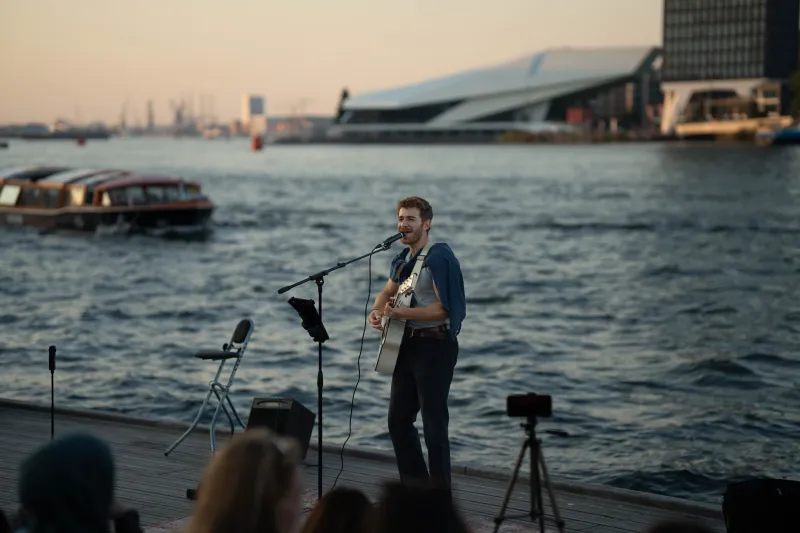
I've got a rule that I've repeated at probably a hundred shows: "I only play my own songs." It started as an artist statement and slowly hardened into an identity. Originals only. No exceptions. Honestly, it was partly principle and partly fear — covers felt like admitting I didn't have enough of my own material to fill a night.
Then came a Thursday night at a little room in Portland where the crowd was friendly but polite, the kind of audience that nods along and checks their phones between songs. I was midway through a set of tunes I'd bled over, and I could feel the wall between me and those people. Solid. Load-bearing. Impenetrable.
That's when a voice from the back yelled, "Play something we know! Bet you won't."
The Moment I Broke My Own Commandment
Here's the thing about a dare in a small room: it's not heckling, it's an invitation. The guy wasn't being mean. He was telling me exactly what he needed and I was refusing to give it to him because of a rule I made up in my own head.
I looked at my bass player. He shrugged, which in musician means "do whatever you want, I get paid either way." And I thought, what's the worst that happens? I play four minutes of somebody else's song, I feel a little cheap, we move on.
I don't want to name the tune, but let's say it's a song every single person in that bar had slow-danced to at some point in their life. I counted it off, half-apologizing into the mic.
By the second chorus, the room had changed. People were singing. Not me — them. Loudly, badly, with total commitment. A couple near the bar put their arms around each other. The phone-checkers were phone-less, eyes up. And here's what wrecked me: they weren't singing my song, but they were singing to each other, in my set, at my show. I was just the guy holding the door open.
What Four Borrowed Minutes Taught Me About Stagecraft
When the song ended, the applause was warmer than anything I'd gotten all night, and my ego took a brief, painful hit. Then I got honest with myself: they weren't applauding the song. They were applauding the moment. And I had spent years treating moments like mine as the only currency worth anything.
Here's what I actually learned up there:
- A set isn't a portfolio review. I'd been performing like an A&R exec was in the back taking notes. Nobody was. The people in front of me wanted a night out, not a resume.
- Meeting the audience where they live isn't selling out. It's literally the job description.
- Rules are great until they become walls. My originals-only policy had stopped protecting my art and started insulating me from the very people I was making it for.
The Part That Still Doesn't Make Sense to Me
After the show, a woman bought a T-shirt, then asked if I had a mailing list. I mumbled something about a sign-up sheet. She scanned the QR code, and — I'm not exaggerating — she turned around and made her two friends do it too. "That was so fun," she said. "You seem like you actually like being here."
By the end of the night, my list had grown more than it had in the previous three months combined. One cover song. One dare. One night of letting the crowd inside the show instead of performing at them.
I still play mostly originals — that part of me hasn't changed and never will. But now I treat a well-chosen cover like a handshake instead of a surrender. It says, "I know why you're here, and I'm glad you came."
If you're an independent artist clinging to a rule that's keeping your audience at arm's length, maybe don't break it forever. Just break it once. See who sings back.