Small Rooms, Real People: Why Three Years of Intimate Venues Changed Everything
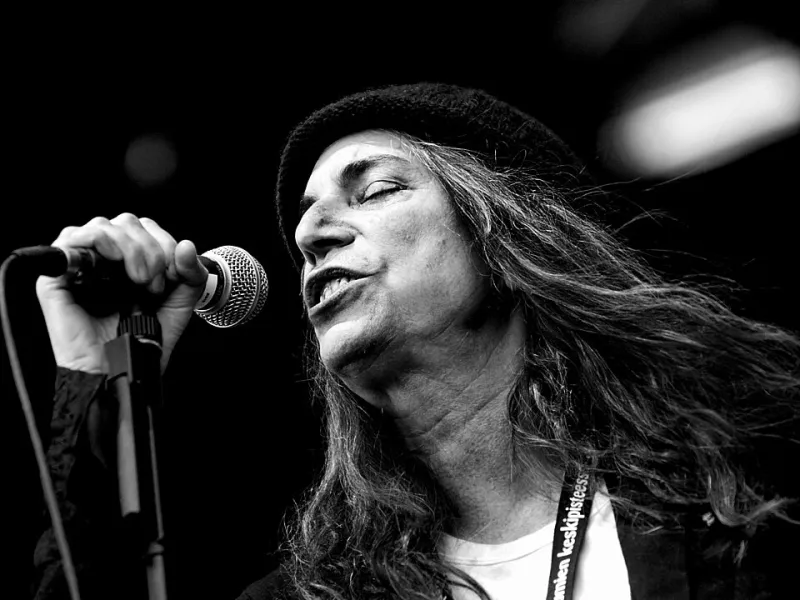
Photo: Beni Köhler from Finland (en:User:Skit ineb), CC BY-SA 3.0, via Wikimedia Commons
I remember standing in the back of a 75-seat listening room in a mid-sized American city — the kind of place tucked above a restaurant or behind a bookstore that most people drive past without noticing — and watching the crowd settle in before the show.
I knew about half of them by name.
That's not a humble brag. That's just what happens when you commit to small rooms long enough. You start to know people. And knowing your audience, really knowing them, changes the kind of artist you become.
How I Ended Up in the Small Room Circuit
I didn't plan to spend three years playing intimate venues. Like most independent musicians, I had the arena fantasy. You know the one. The lights, the crowd, the moment where thousands of people sing your words back at you.
But early on, I got a string of bookings in smaller spaces — house concerts, community arts centers, regional listening rooms, small-town theaters with maybe 120 seats — and something happened that I didn't expect.
I started getting better faster.
Not technically faster, though that came too. I mean better at the thing that actually matters: connecting. Because when you're playing a room where the person in the back row is thirty feet away from you, there's nowhere to hide. The vibe either lands or it doesn't. You know immediately. The feedback loop is instant.
In a big venue, you can disappear behind production. In a small room, you are the production.
What Intimacy Does to a Performance
Here's something I learned pretty quickly: small rooms force you to be present in a way that big stages don't necessarily require.
When I could see individual faces, I could tell when a song was landing and when it was losing people. I could feel the energy shift in real time. And instead of just powering through a set list, I started responding to that energy. Rearranging songs on the fly. Cutting a tune that felt wrong for the room and replacing it with something else. Talking between songs in a way that was actually conversational rather than performative.
One night in a small theater in the Midwest, I was midway through a set when I could feel the audience pulling slightly away — not disengaging, just... waiting for something more personal. So I scrapped the next three planned songs and played something I'd written the week before that I'd never performed live. Raw and unpolished.
The room went completely still. Not the uncomfortable kind of still. The kind where you can feel people actually listening.
Afterward, three different people told me that song was the reason they'd be back. I'd never even rehearsed it properly.
That doesn't happen at a festival. That doesn't happen when you're behind a barricade.
The Human Connection That Big Stages Can't Buy
One of the things I didn't anticipate about the small room circuit was how much it would change my relationship with the people who show up.
At larger shows, fans are an audience. At small shows, they're guests. There's a difference in the social contract, and you feel it.
I started staying after every show — not as a meet-and-greet strategy, but because people would just hang around and talk. About the music, about their own lives, about what a particular song meant to them. I heard stories that I later wrote into new material. I got feedback that was honest in a way that a social media comment never is.
One woman told me that a song I'd written during a particularly rough stretch of my life had been playing on repeat during her father's final weeks in hospice. She didn't say it to flatter me. She said it matter-of-factly, like she wanted me to know the song had done its job.
I've thought about that conversation probably a hundred times since. You don't get that moment from behind a stadium barricade.
The Artistic Freedom Nobody Talks About
Here's the practical reality that took me a while to fully appreciate: small venues give you creative freedom that larger platforms actively work against.
When you're playing rooms of 50 to 200 people, nobody is managing your set list. Nobody is telling you the audience needs to hear the three songs that charted. You can experiment. You can play the weird deep cuts. You can try a new arrangement of an old song and see what happens.
I played an entirely acoustic set once in a room that was used to seeing me with a full band setup. I was nervous about it. The audience leaned in closer. Literally — people in the front rows shifted forward in their seats.
That's a gift. That's an audience that's actually with you rather than watching you from a distance.
Why I'm Not in a Rush to Chase the Big Rooms
I'm not pretending the small room circuit is all magic and connection. It's also loading gear into a van at 1 a.m., navigating spotty sound systems, and sometimes playing to thirty people in a room that holds eighty.
But even the hard nights taught me something. A thin crowd forces you to perform as if the room is full. It builds a kind of internal discipline that has nothing to do with external validation. You learn to find the energy inside yourself rather than borrowing it from the crowd.
And honestly? The relationships I've built with venues, with local music communities, with the people who show up again and again — that's a foundation. It's real. It doesn't disappear when an algorithm changes or a playlist gets reshuffled.
The big stage might still come. I'm not closing the door on anything. But I know now that I'll carry everything I learned in these small rooms with me whenever I get there — and that the artist who walks onto that bigger stage will be genuinely ready for it because of these three years.
Some things can only be learned up close.