I Almost Didn't Send That Email — And It Led to the Best Music I've Ever Made
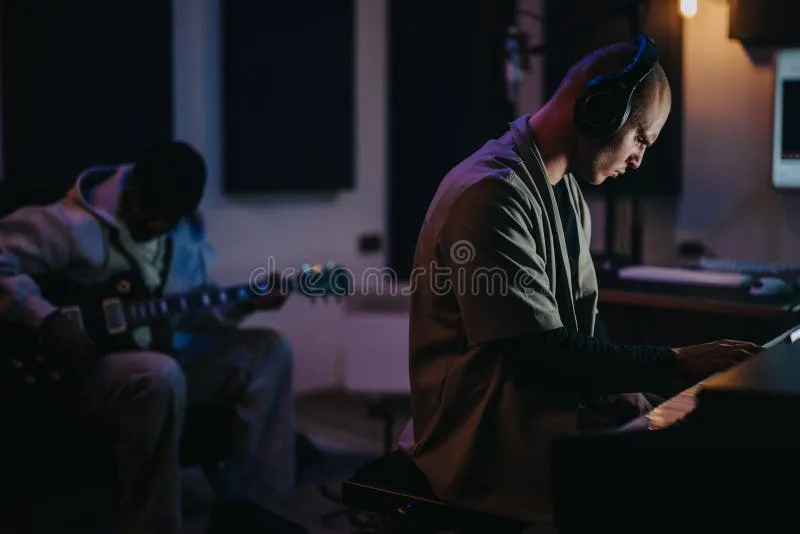
Photo: two musicians collaborating in recording studio writing music together, via thumbs.dreamstime.com
The draft sat in my outbox for eleven days.
I'd written it, rewritten it, cut half of it, added things back, deleted my name from the sign-off and then put it back again. I read it out loud to myself in my kitchen at midnight like I was rehearsing for a job interview I was pretty sure I wasn't going to get.
Then I almost deleted the whole thing and pretended the idea had never crossed my mind.
I'm really glad I didn't.
Why Reaching Out to Someone You Admire Feels So Impossible
There's a specific kind of vulnerability that comes with approaching an artist you genuinely respect and saying: I think we should make something together.
It's different from a fan message. It's different from a compliment. You're not just expressing admiration — you're implicitly saying that you believe you have something to offer in return. That your creative voice is worth their time. That the thing you'd make together would be better than what either of you would make alone.
For a lot of independent musicians and artists, that's a terrifying claim to make. Because what if they disagree? What if they look at your work and don't see a peer — they just see someone reaching?
I'd been following this particular artist's work for years. Different genre influences, different geographic roots, but a similar emotional approach to songwriting — the kind where you can feel the writer actually present in the room with you when you listen. I respected their craft in the specific, informed way that only comes from paying close attention.
And I had an idea that I genuinely believed needed both of us to work.
The Pitch That Almost Didn't Happen
I want to be honest about what almost stopped me, because I think it's something a lot of creative people deal with.
I was afraid of looking like I was overestimating myself. I was afraid of the silence that sometimes follows a pitch — that particular silence that means no but doesn't say it directly. I was afraid that if they said yes out of politeness and then the work wasn't good, I'd have embarrassed myself in front of someone whose opinion I actually cared about.
Those fears are real. I'm not going to dress them up as something more poetic.
What finally got me to send the email was a pretty simple reframe: the worst realistic outcome was a polite no, and I'd survive that. The best realistic outcome was a yes. And the outcome of not sending it was guaranteed to be nothing.
So I sent it.
The response came back in four days. They were interested. They had questions. They wanted to get on a call.
I remember reading that reply and just sitting there for a minute, not quite processing it.
What the First Creative Conversations Actually Looked Like
Here's what nobody tells you about collaborating with someone you admire: the first few conversations are awkward in a really productive way.
We spent probably the first two calls mostly just talking about our processes — how we each worked, what we protected, what we were willing to mess with. There was this careful quality to it, like two people figuring out the rules of a game before agreeing to play.
I was still performing slightly. I'd catch myself framing things to sound more deliberate or confident than I actually felt. And at some point in the second call, they said something that cracked that open — something honest about their own uncertainty, about a creative habit they weren't sure was serving them anymore.
And I just matched that honesty. Dropped the performance. Told them about a direction I'd been wanting to take my sound for two years but hadn't committed to because I wasn't sure it was right for my audience.
After that, the conversations got real. And the work started.
When Two Sounds Collide and Neither One Wins
The early sessions were messy in the best way.
We both came in with ideas, and the first instinct for both of us — I think this is human nature — was to advocate for our own. I'd bring a chord progression I loved, they'd bring a melodic idea that didn't naturally fit it, and there'd be this moment of negotiation.
But somewhere around the third session, something shifted. We stopped trying to win the negotiation and started asking a different question: what does the song actually need?
That sounds simple. It is not simple. It requires letting go of your attachment to your own contribution, which is genuinely hard when you've spent years developing a creative identity.
But when we got there — when we both agreed that the song was the boss and we were just serving it — the work got strange and exciting and surprising in a way that neither of our solo projects had been for a while.
I wrote a melody in one of those sessions that I never would have written alone. Not because it was technically beyond me, but because I wouldn't have had the courage to go that direction without someone in the room who was clearly willing to go there with me.
What the Finished Album Actually Sounds Like
I'm not going to oversell it. It doesn't sound like a genre-defining masterpiece. It sounds like two people who figured out how to be honest with each other in a room and made something that neither of them could have made separately.
There are moments on that record where I genuinely can't remember who contributed what. The lines got blurred. And that blurring — that loss of individual ownership — is actually the thing I'm most proud of.
Because it means we actually did the thing. We stopped protecting our individual sounds and built something new.
What I'd Tell Anyone Sitting on a Draft in Their Outbox
Send it. Seriously.
Not recklessly — put real thought into your pitch. Make it specific. Tell them what you admire about their work in a way that shows you've actually paid attention, not just a generic compliment. Have an actual idea, not just a vague interest in working together. Respect their time by being clear about what you're proposing.
But then send it. Because the alternative is sitting on an idea that might be the best thing you've ever made, and never finding out.
The email I almost deleted is the reason I made music I'm genuinely proud of. Eleven days in a draft folder, and it almost cost me everything that came after.
Don't let fear be the editor of your creative life. That's not a job it's qualified for.