What Singing Someone Else's Song Taught Me About My Own Voice
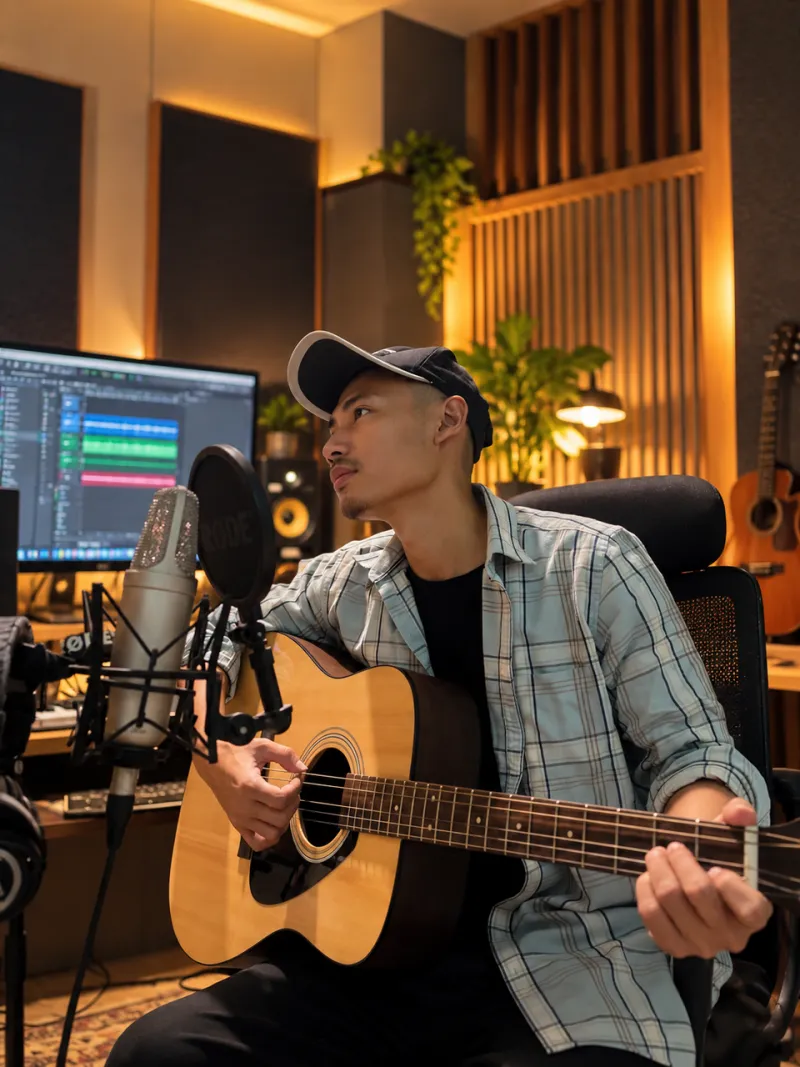
Photo: Susamdb, CC BY 4.0, via Wikimedia Commons
There's this assumption floating around in songwriter circles — especially the independent, DIY kind — that covering someone else's song is somehow lesser work. Like you're borrowing instead of building. Like it doesn't count.
I used to believe that. Then I spent three weeks pulling apart a song I loved down to its bones, and it wrecked me in the best possible way.
The Song I Chose (And Why It Scared Me)
I'm not going to name the original here because honestly, this story isn't really about that song. It's about what the process of learning it, breaking it, and rebuilding it did to me as an artist.
What I will say is that I picked it specifically because it intimidated me. The melody had these wide, open intervals that I'd always skipped past in my own writing because I wasn't sure I could pull them off. The chord structure underneath was deceptively simple — the kind of simple that sounds easy until you're sitting in a room alone trying to make it feel like something.
I'd been playing my own originals for so long that I'd gotten comfortable. Not lazy, exactly, but comfortable. My hands knew where to go. My voice knew what to do. I was operating inside a set of habits I didn't even know I had.
Covering this song was like turning on a light in a room I'd been navigating in the dark.
What Happens When You Slow Everything Down
The first thing I did was strip it completely. No original recording playing in the background, no chord charts pulled from some tab site. Just me, my instrument, and the memory of the melody.
And I got it wrong. A lot.
Not wrong like out of tune — wrong like emotionally off. I'd play through a verse and something would feel hollow, and I'd have to sit with that hollowness and figure out what it was telling me. That's when it got interesting.
Because when you write your own stuff, you already know the emotional destination. You wrote it. You lived it. The song is a map you drew yourself, so you always know where you're headed.
Someone else's song is a map you're reading in a second language. You have to actually think about every turn. You have to ask yourself: why does this line land that way? What is this chord change doing to the feeling? Why does the tempo here feel slower even though it isn't?
Those questions? They were the most valuable thing I'd worked on in years.
The Moment I Stopped Covering and Started Translating
About a week in, I made a decision. I was going to stop trying to honor the original and start treating the song like raw material.
I changed the key to fit where my voice actually lives, not where the original artist's voice lived. I slowed down a section that always felt rushed to me. I took a bridge that was built for a full band and figured out how to make it work with just one instrument — not as a stripped-down version, but as its own thing.
And something weird happened. The song started sounding like me.
Not in a way that erased what made it great. More like... the structure and the bones of someone else's genius became a frame that I was now filling in with my own colors. That's translation. That's not imitation.
I think this is why the best covers throughout American music history — the ones that become standards, the ones that outlive the originals in some cases — feel like entirely new pieces of art. The interpreter isn't hiding. They're revealing.
What It Showed Me About My Own Writing
Here's the thing nobody told me about covering songs: it's a diagnostic tool.
When I was working through that bridge and struggling to make it land emotionally, I realized I'd been avoiding that same kind of emotional directness in my own writing. I was always approaching the feeling sideways, through metaphor and imagery, because going straight at it felt too exposed.
The cover forced me to go straight at it. There was no other option — the song demanded it.
So I went back to a few of my originals after finishing the cover, and I heard the avoidance immediately. I heard all the places where I'd circled around the real thing instead of saying it. And I started rewriting.
One cover session produced more useful self-knowledge than months of journaling and introspection.
Why More Songwriters Should Do This
I'm not saying abandon your originals. I'm saying give yourself the gift of working inside someone else's creative logic for a while. Pick a song that scares you a little. Pick something outside your genre if you're feeling bold. Pick something with a structure you'd never naturally gravitate toward.
Then take it apart slowly. Figure out why it works. And then — this is the important part — make it yours. Not as a tribute. Not as a karaoke performance. As a genuine creative act of translation.
You'll find out things about your voice, your instincts, and your emotional range that your own songs might never surface. Because when you write originals, you're always working with what you know. When you cover, you're working with what you don't.
And that gap? That's where the growth lives.
I play that cover in my live set now. People ask me if it's an original. That's not me bragging — that's just proof that translation, done honestly, is its own kind of creation.